
ProsperWise Blog
Realized vs. Unrealized Gains: The Law of Decay in Canada | ProsperWise
May 17, 2026 · Reading time: 5 min · Author: Rolf Issler · LinkedIn
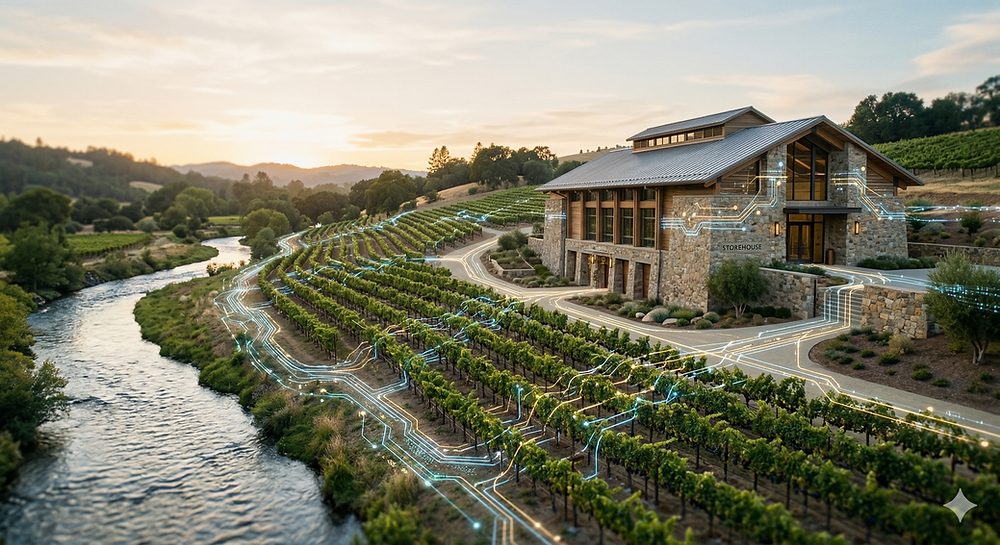
Growth that is never harvested is not wealth; it is a liability.
In the fourth chapter of The River, The Vineyard, and The Storehouse, Silas leads Elian to the edge of his vineyard. The vines are heavy with dark, jewel-like clusters, the largest Elian has ever seen. Elian wants to wait. He wants "one more week" for the grapes to grow even larger.
But Silas points to the ground. A single grape has fallen, covered in grey rot. The "Law of Decay" has already begun its work.
For many Canadian founders and investors, this is the most dangerous season of their financial lives. They have spent years tending the Vineyard, building a company or a portfolio that is now worth millions on paper. But because they have fallen in love with the reflection of that growth, they refuse to move the lever of the Gold-Press.
They are waiting for "one more week" while the rot sets in.
The Master of the Tribute: Overcoming Tax Paralysis
In the Canadian context, the Gold-Press has a cost: the Capital Gains Tax. We call the tax man the "Master of the Tribute." Many Canadians are so averse to paying this tribute that they let their prosperity rot on the vine. They watch a winning stock or a business valuation reach unsafe levels of concentration, refusing to rebalance because they don’t want to "lose" a percentage to the CRA.
This is a failure of perspective.
It is better to have 66% of a Gold Coin in your Storehouse, immutable, protected, and liquid, than 100% of a "Rotting Grape" on a dead vine. Realizing a gain is not a loss; it is the act of turning a vulnerable effort into a permanent result. It's stewardship.
The Law of Decay: Inflation, Volatility, and Concentration
In the Sovereignty Operating System™, we define the Vineyard as your growth capital. It is productive, beautiful, and necessary. But the Vineyard is also vulnerable. It sits in the River, the external economic environment, where it is subject to three specific forces of decay:
- The Great Frost (Market Volatility): Markets do not care about your "paper" net worth. A position that doubled in value this year can be hollowed out by a market correction in a single afternoon.
- The Winged Thieves (Inflation): While your asset value climbs, the purchasing power of the currency it is denominated in is often being eaten away.
- The Damp Rot (Concentration Risk): For a founder, wealth is often concentrated in a single "vine." If that business faces a structural shift or an industry downturn, the entire Vineyard is at risk.
Wisdom is understanding that the Vineyard is for growing wealth, but the Storehouse is for keeping it. To move value from one to the other, you must use the Gold-Press.
The Sovereignty Threshold
The reason the Gold-Press feels so painful is that it requires you to "kill" the growth. The grapes must be crushed for the gold to flow.
But the objective of your financial life is not to have the largest garden in the valley; it is to reach your Sovereignty Threshold. This is the exact number at which your lifestyle is permanently secured, independent of any market risk or business cycle.
You cannot reach that threshold with Unrealized Grapes. You reach it with Realized Gold.
Start Your Stabilization
If you are navigating a business exit or a significant wealth event in BC, the first 90 days are the most critical. Don't let your prosperity rot while you wait for a "perfect" time that the Law of Decay will never grant you.
Start with Georgia to identify your wealth event category and see if a Stabilization Session is the right next step for your Sovereignty Charter™.
Frequently Asked Questions
What is the difference between unrealized and realized gains?
An unrealized gain is an increase in the value of an asset, like a business, a stock, or a property, that exists only on paper. It is a "reflection" of wealth. A realized gain occurs when you sell that asset or move it through the Gold-Press. Only when a gain is realized does it become "Gold", capital that is liquid, governed, and capable of being moved into your Storehouse.
Why is rebalancing a portfolio important for Canadian investors?
Rebalancing is the act of harvesting. When one "vine" in your Vineyard grows too large, it creates concentration risk. If that specific sector or asset class faces a "Great Frost" (a market correction), your entire prosperity is at risk. Rebalancing ensures you are systematically moving gains out of the River’s reach and into the protected structure of your Storehouse.
How does the Capital Gains Tax affect my wealth transition?
In Canada, the "Master of the Tribute" (the CRA) requires a portion of your realized gains to be paid as tax. For many, this creates "Tax Paralysis", the tendency to hold onto a risky or over-ripe asset simply to avoid the tax bill. Sovereignty is recognizing that it is better to own 66% of a permanent Gold coin than 100% of a grape that is destined to rot.
What is the "Law of Decay" in finance?
The Law of Decay is the inevitable erosion of unmanaged wealth. It takes the form of inflation hollowing out your purchasing power, market volatility crushing paper valuations, and the lack of a governance structure leading to "leakage" through reactive spending or poor deployment. If you do not harvest your prosperity, the environment will eventually reclaim it.
When is the right time to use the Gold-Press?
The timing is not determined by the market, but by your Sovereignty Threshold. Once your Vineyard has produced enough "fruit" to secure your lifestyle and your legacy permanently, the risk of holding the asset outweighs the reward of further growth. At this point, the Gold-Press is the only logical next step.
How does a Stabilization Session help with realizing gains? Before you trigger a major taxable event, you need a Sovereignty Charter™. The Stabilization Session provides the containment necessary to model the "Tribute," define the rules of the Storehouse, and ensure that once the gold is pressed, it is deployed with purpose rather than lost back into the River.
Ready to talk about your own situation?
Talk It Through