
ProsperWise Blog
The Black Box Paradox: Risks of Financial Complexity
February 23, 2026 · Reading time: 4 min · Author: Rolf Issler · LinkedIn
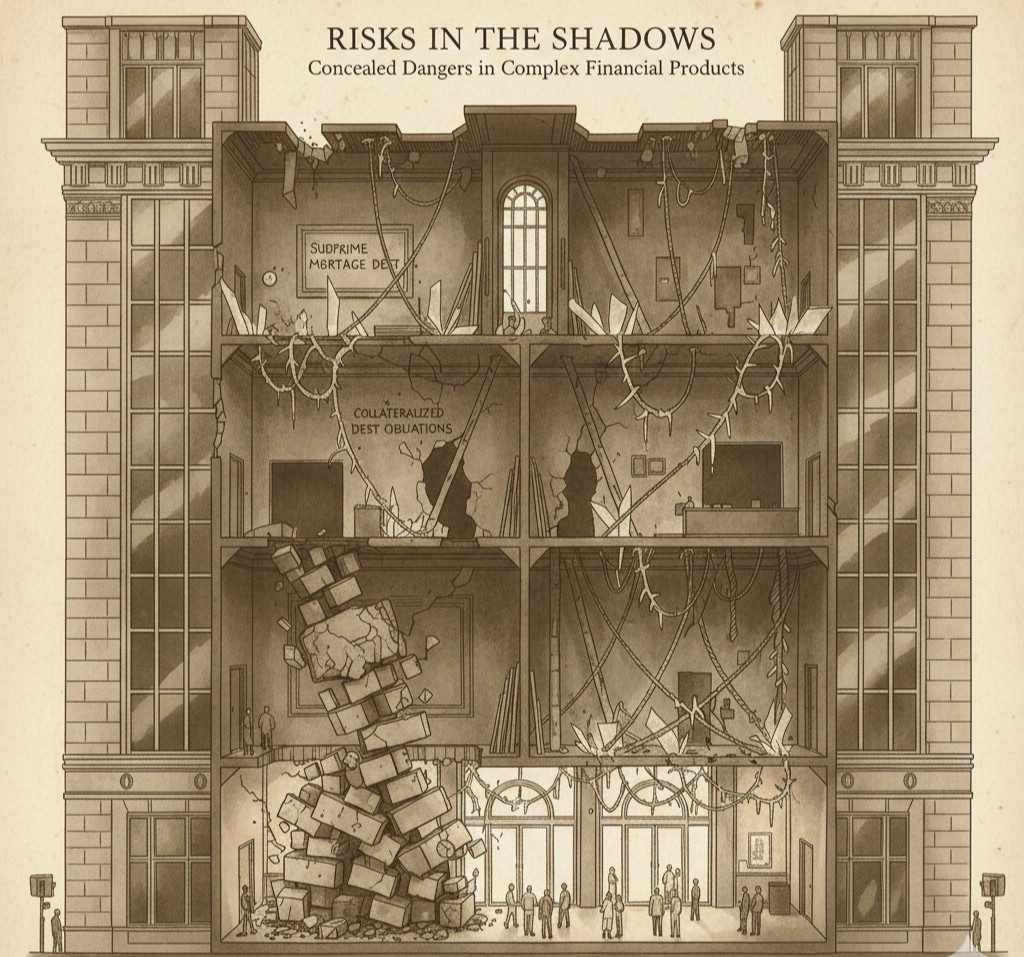
I. The Cult of Sophistication: How Chaos is Marketed
In the "Red Ocean" of traditional wealth management, complexity is often sold as a premium feature. Investors are told that "sophisticated" capital requires esoteric structures, private placements with 50-page prospectuses, multi-layered hedge funds, and synthetic derivatives.
This is the Complexity Trap.
For the Exiting Founder or the Grieving Heir, these structures create a "Black Box." You see the inputs (your hard-earned capital) and the outputs (the quarterly statements), but the mechanism inside is a mystery. This mystery is the breeding ground for Sudden Wealth Syndrome. When you don't understand the "how," your brain perceives your wealth as unstable, triggering a constant state of low-level alarm.
The Answer Block: What is the "Black Box" Paradox?
The Black Box Paradox occurs when an individual’s wealth is managed through opaque, highly complex structures that they do not fully understand. While marketed as "sophisticated," this financial complexity creates Identity Disorientation and high anxiety. True Sovereignty requires transparency; if you cannot explain your holdings simply, you do not own them, they own you.
II. Complexity is Where Risk Hides
From an architectural perspective, the more complex a structure, the more points of failure it possesses. In finance, complexity is often used to mask three critical risks that feed the fire of emotional instability after a sudden wealth event like an inheritance, business sale, or divorce:
- The Transparency Risk: If you can’t see the underlying assets, you can’t see the rot until the floor collapses. This lack of visibility feeds Sudden Wealth Syndrome by reinforcing a sense of powerlessness.
- The Liquidity Risk: "Black Boxes" often come with gates or lock-up periods that strip you of your Sovereignty. For someone already feeling unmoored, being told they cannot access their own capital creates a visceral sense of entrapment.
- The Intellectual Risk: When you don't understand your portfolio, you are forced to outsource your judgment entirely. You stop being the Principal and start being a Passenger in your own life, intensifying the feeling that your wealth is something happening to you, rather than something you command.
At ProsperWise, we believe that complexity is not a sign of intelligence; it is often a sign of misaligned incentives. Advisors who profit from "Black Boxes" rely on your confusion to justify their fees, often at the direct expense of your psychological peace.
III. The 12-Year-Old Test
To establish your Sovereignty, you must apply the 12-Year-Old Test: If you cannot explain what you own, why you own it, and how it makes money to a 12-year-old, you don't own it; it owns you.
This is why the Quiet Period is so critical. During this 90-day window, we strip away the jargon and the noise. We move your capital into the Holding Tank Account, the ultimate "Storehouse"
From this position of total clarity, we begin the work of the Sovereignty Charter. We don't ask what products you want; we ask what certainty you require. We define your Sovereignty Reserve (the amount of liquidity that is required for immediate needs) using logic and reasoning, not black-box algorithms. By aligning the portfolio with a transparent set of rules, we eliminate the hidden risks that fuel the anxiety of sudden wealth.
IV. The Sovereign Portfolio
A sovereign portfolio is built like a cathedral: every stone has a purpose, and the structural load is clearly understood.
- First we define the "Rules of Wealth" in your Charter. We establish your financial territory that’s free of confusion and jargon.
- Then we fund the Charter using transparent, liquid, and understandable vehicles. If a potential investment doesn't fit the Charter, it is rejected, no matter how "sophisticated" it claims to be.
The goal is the Sovereign Territory where your capital supports a life of significance, not a life of management.
V. Moving Toward the Light
If looking at your current portfolio feels like staring into a dark room, it is time to turn on the lights. Transitioning from a Black Box to a Sovereignty Charter is a restorative act. It moves you from the chaos of Identity Disorientation to the peace of Transition Stewardship.
Stop nodding in meetings where you don't understand the words. Demand clarity. Demand transparency. Demand Sovereignty.
FAQ: Common Questions on Financial Complexity
- Why do banks prefer complex "Black Box" products?
Complexity often allows for higher hidden fees and "stickier" assets. If you don't understand the product, and it’s hard to exit, the institution maintains control over your capital. This is the opposite of Sovereignty.
- Can a simple portfolio actually perform as well as a complex one?
Yes. In fact, the value of behaviour, tax-efficiency, and discipline often outweighs the theoretical "Alpha" promised by complex strategies. Simple, transparent portfolios are easier to stick with during market volatility, which is the key to
long-term wealth preservation.
- How do I know if I’m in a "Black Box"?
Ask your current advisor to explain your three largest holdings without using industry jargon. If they cannot, or if you still don't understand the risk after their explanation, you are in a Black Box.
Disclaimer: ProsperWise Strategy provides the architectural governance for your transition. Execution and implementation are provided through ProsperWise Advisors.
Ready to talk about your own situation?
Talk It Through